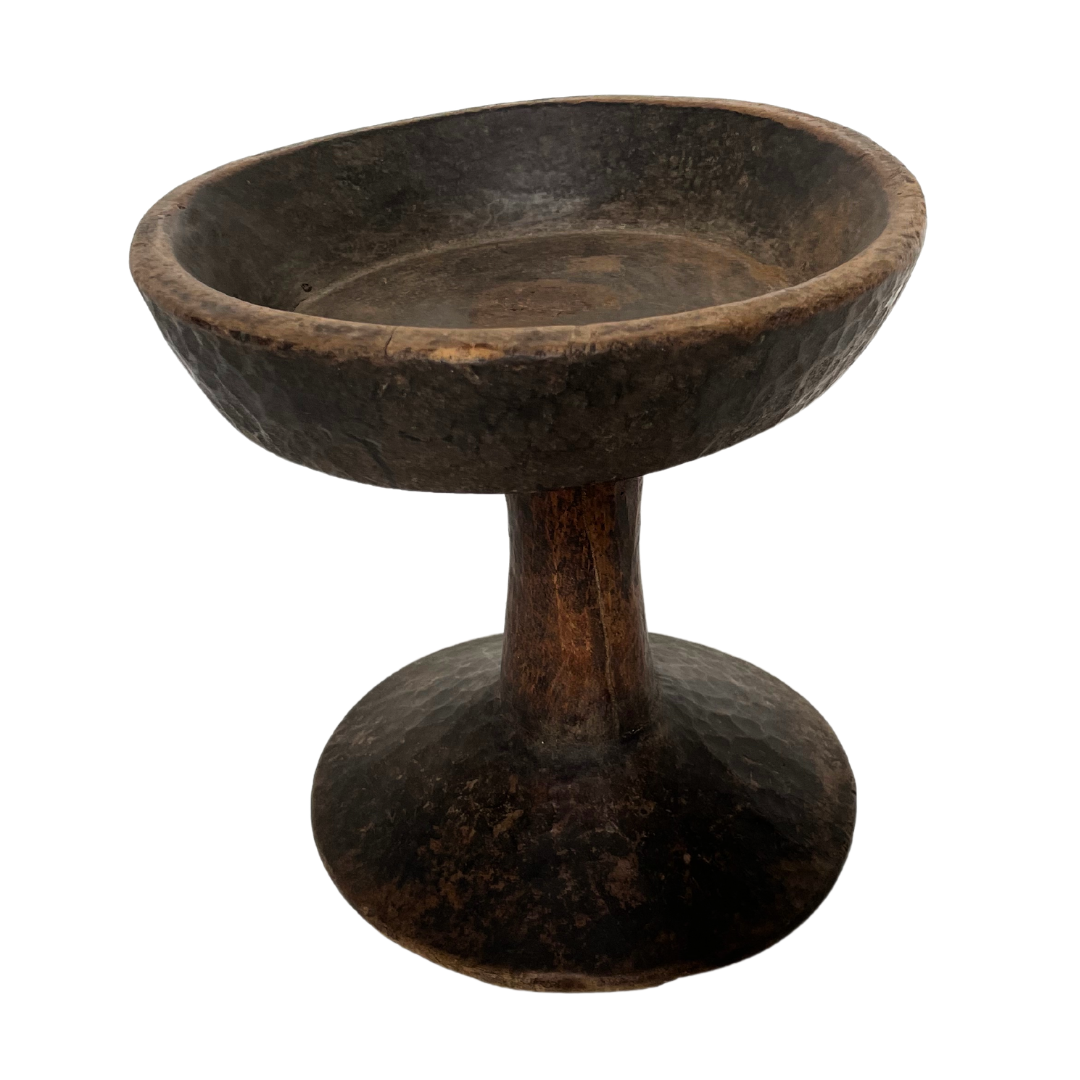
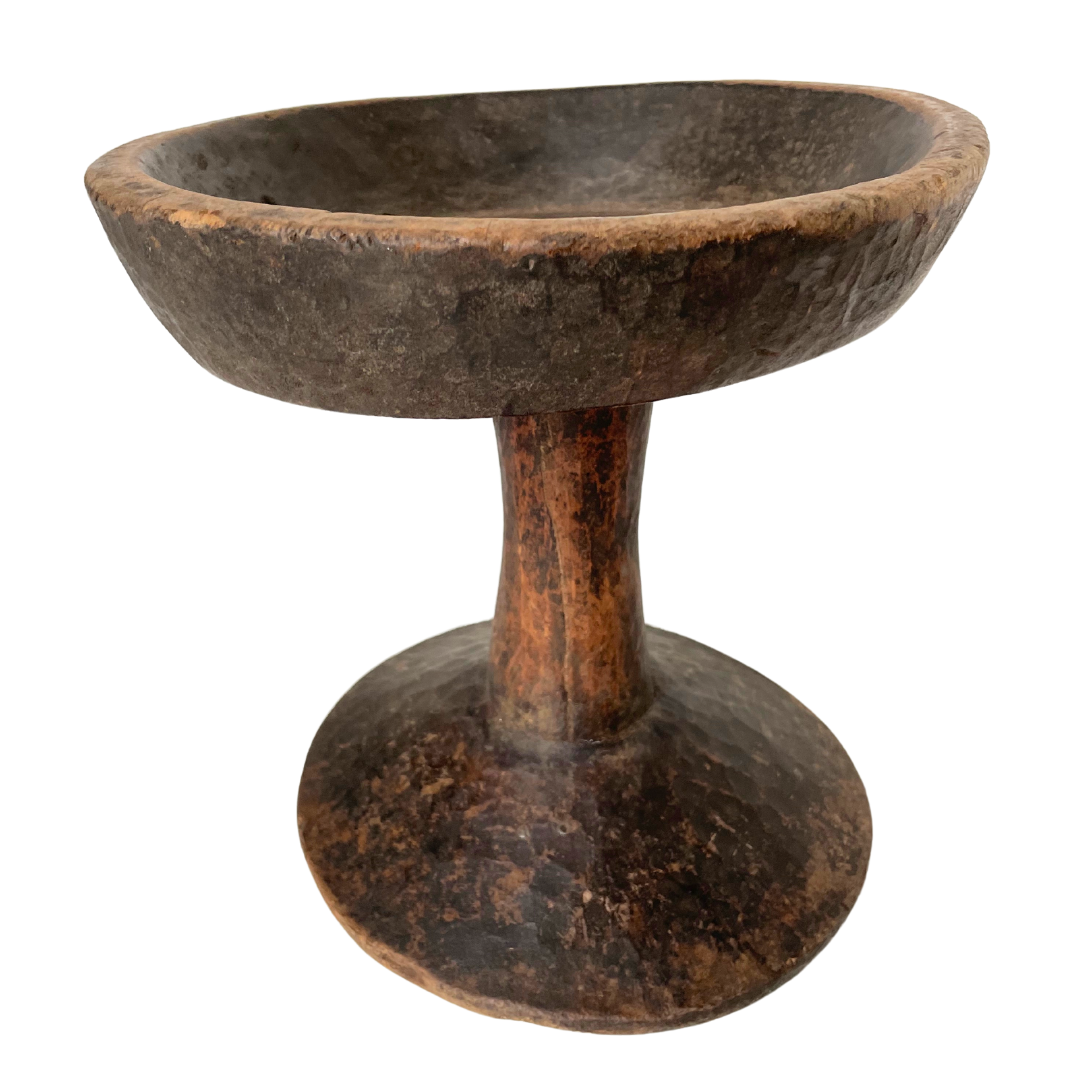
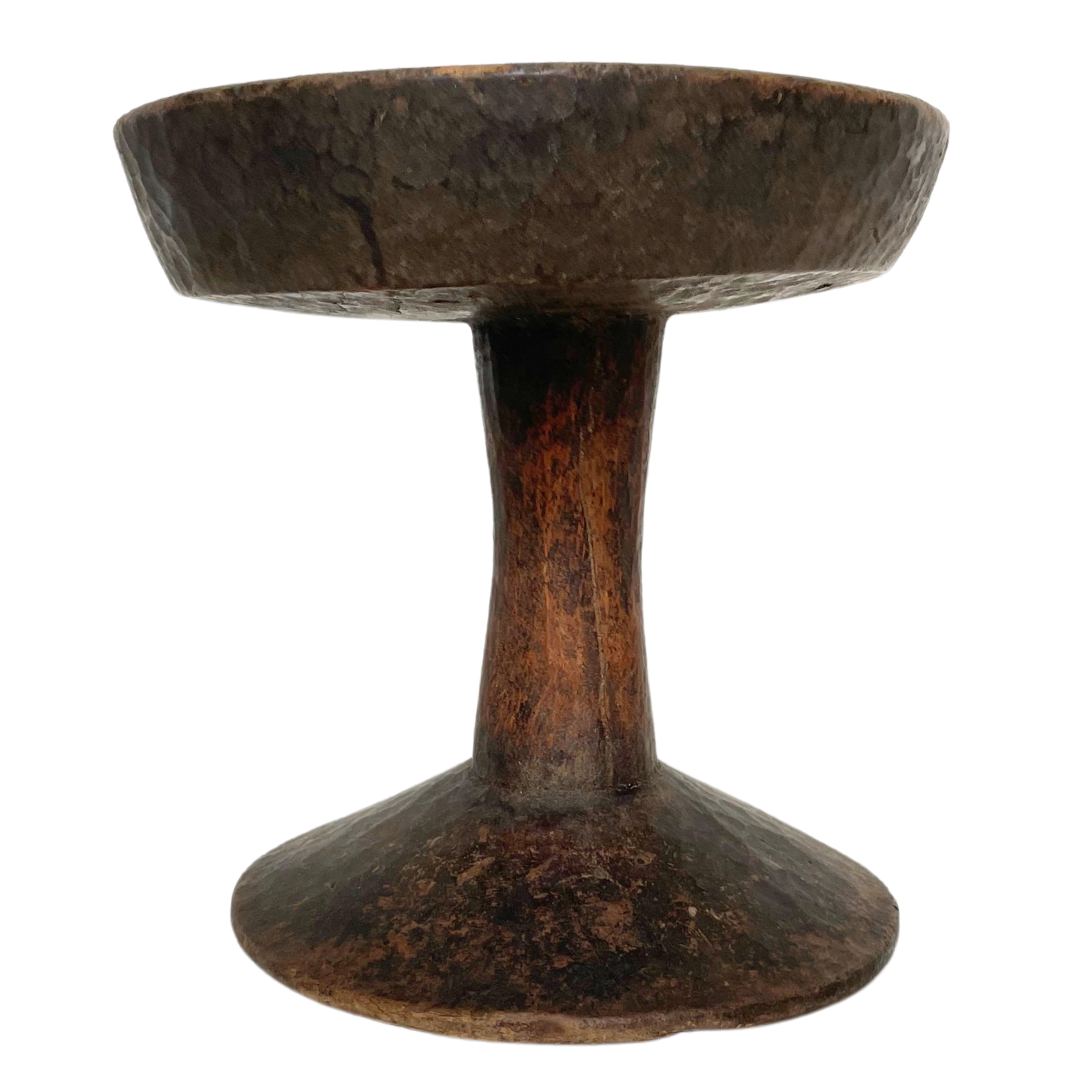
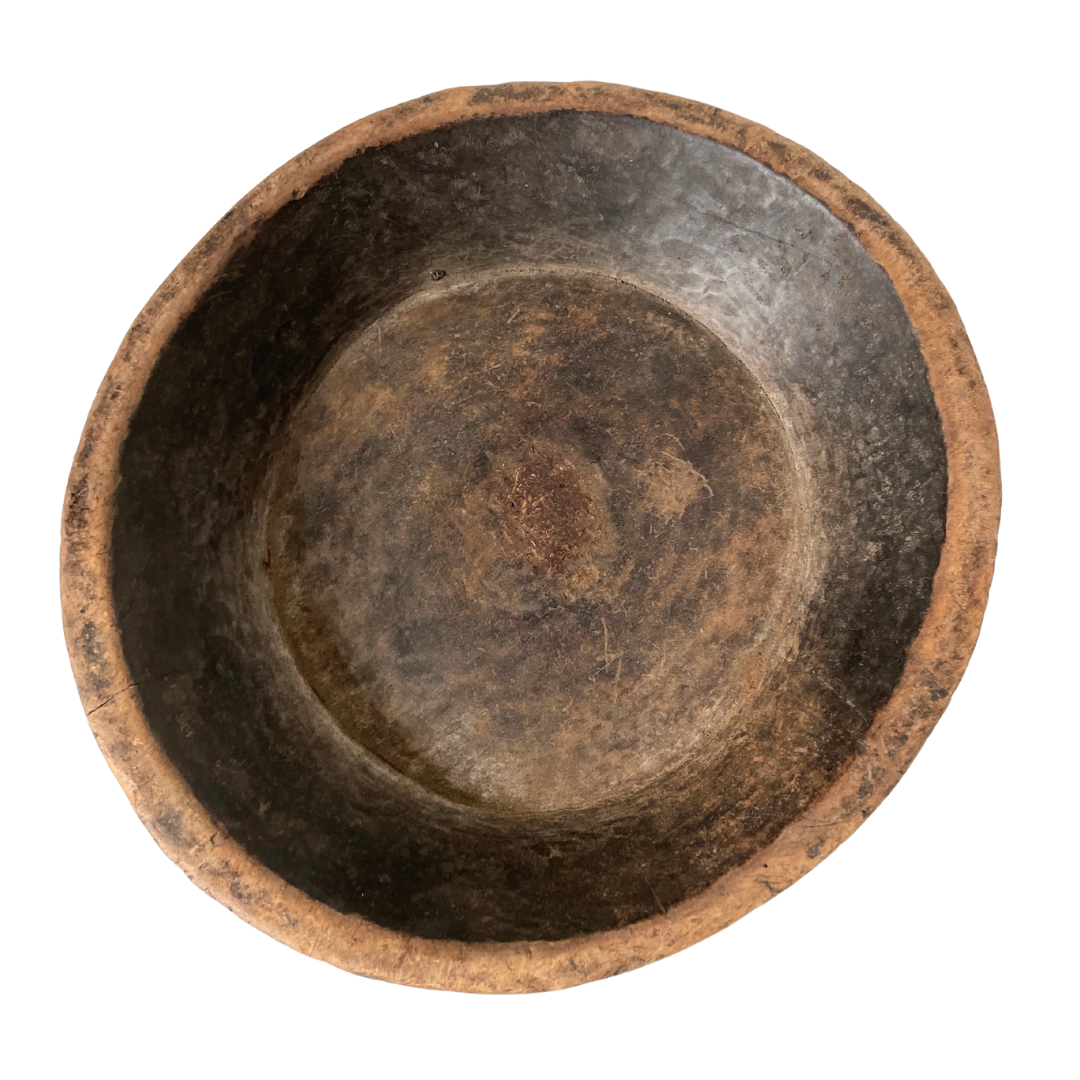
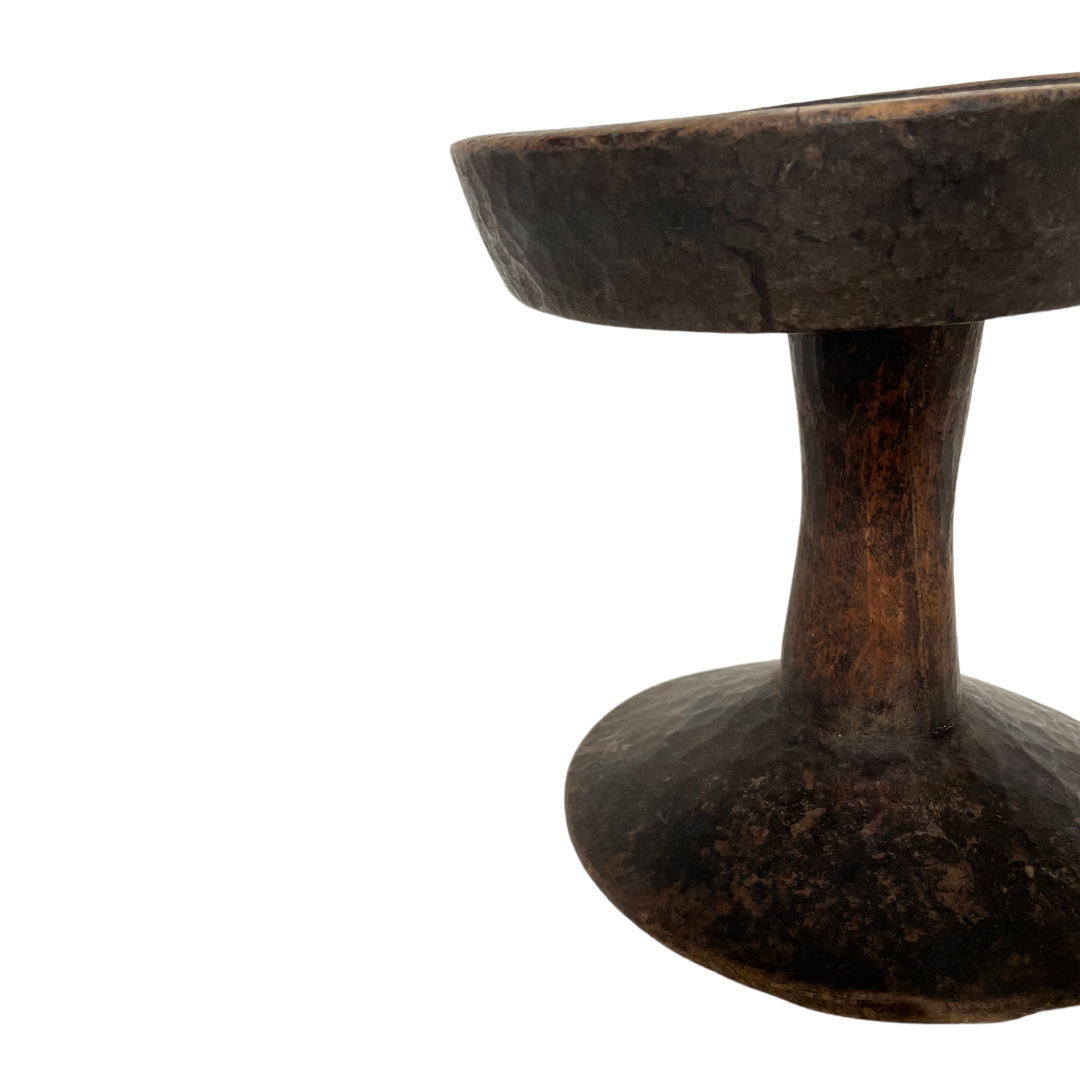
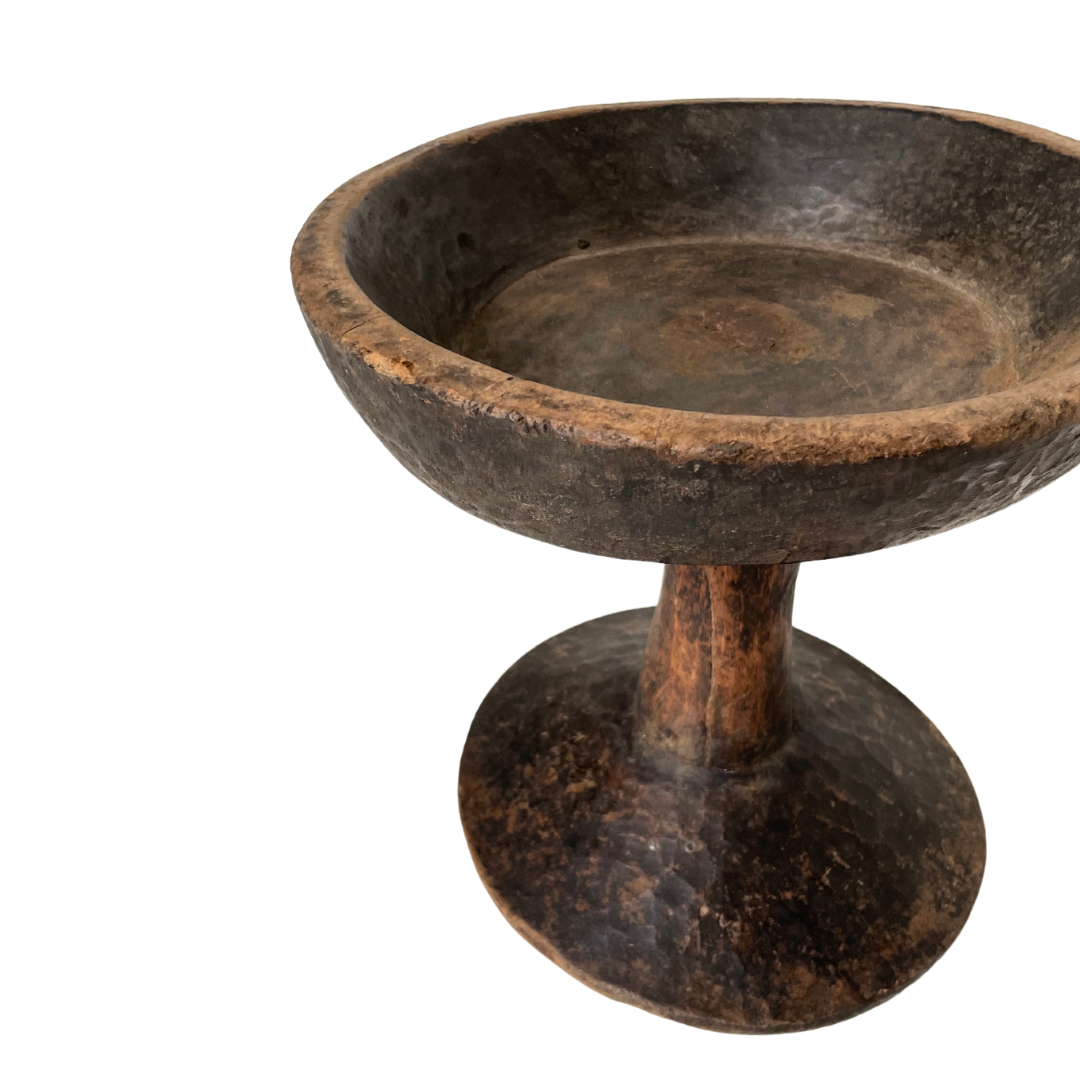
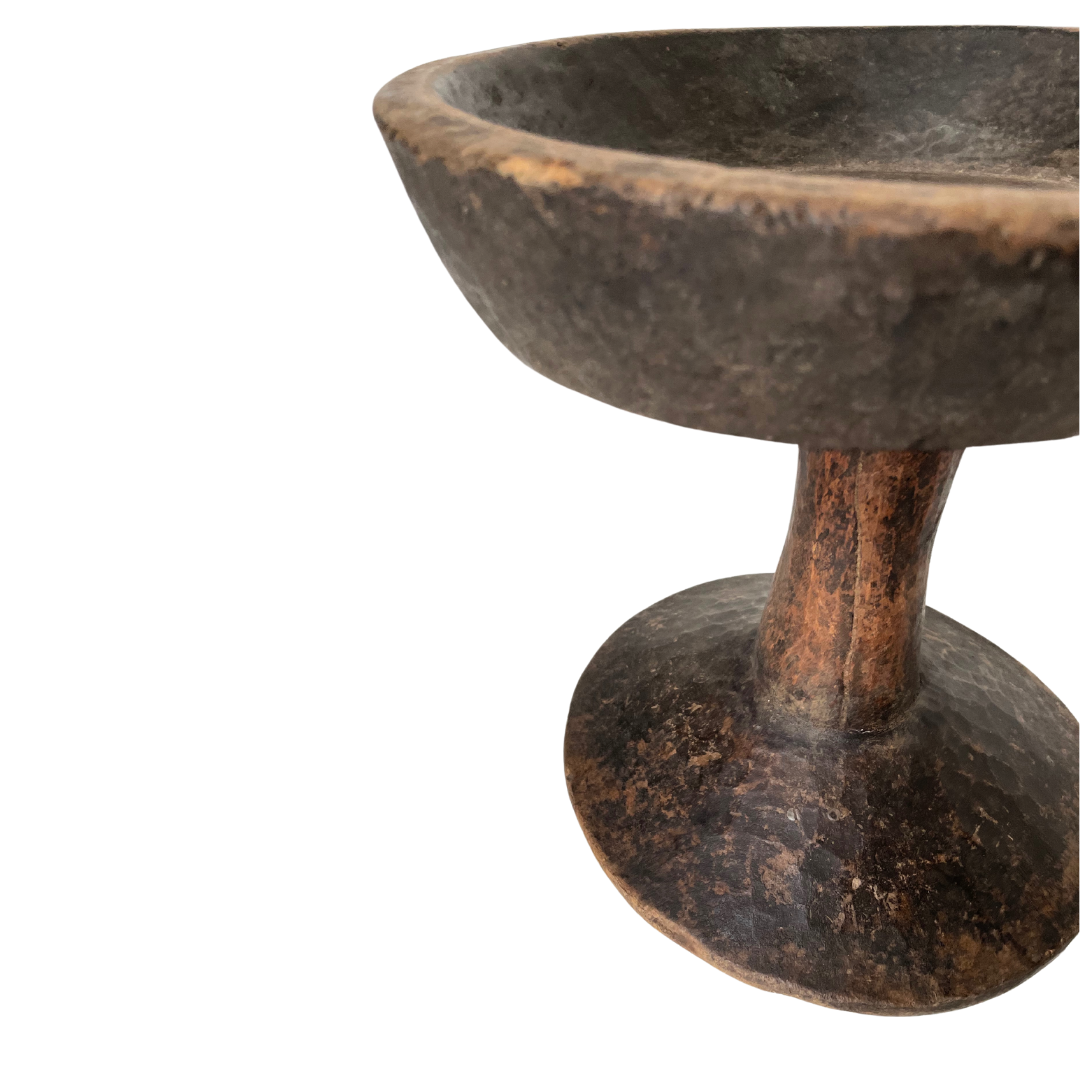
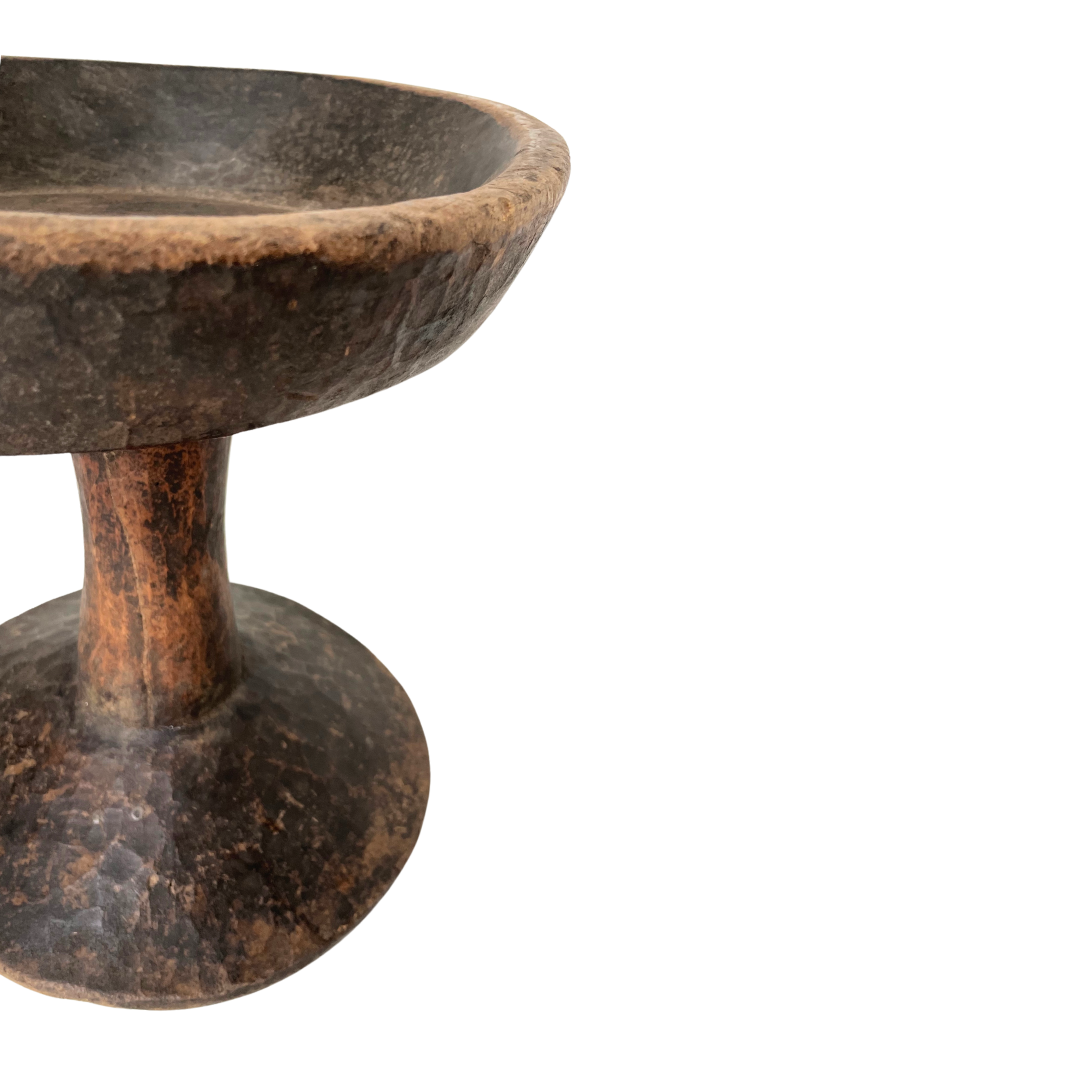
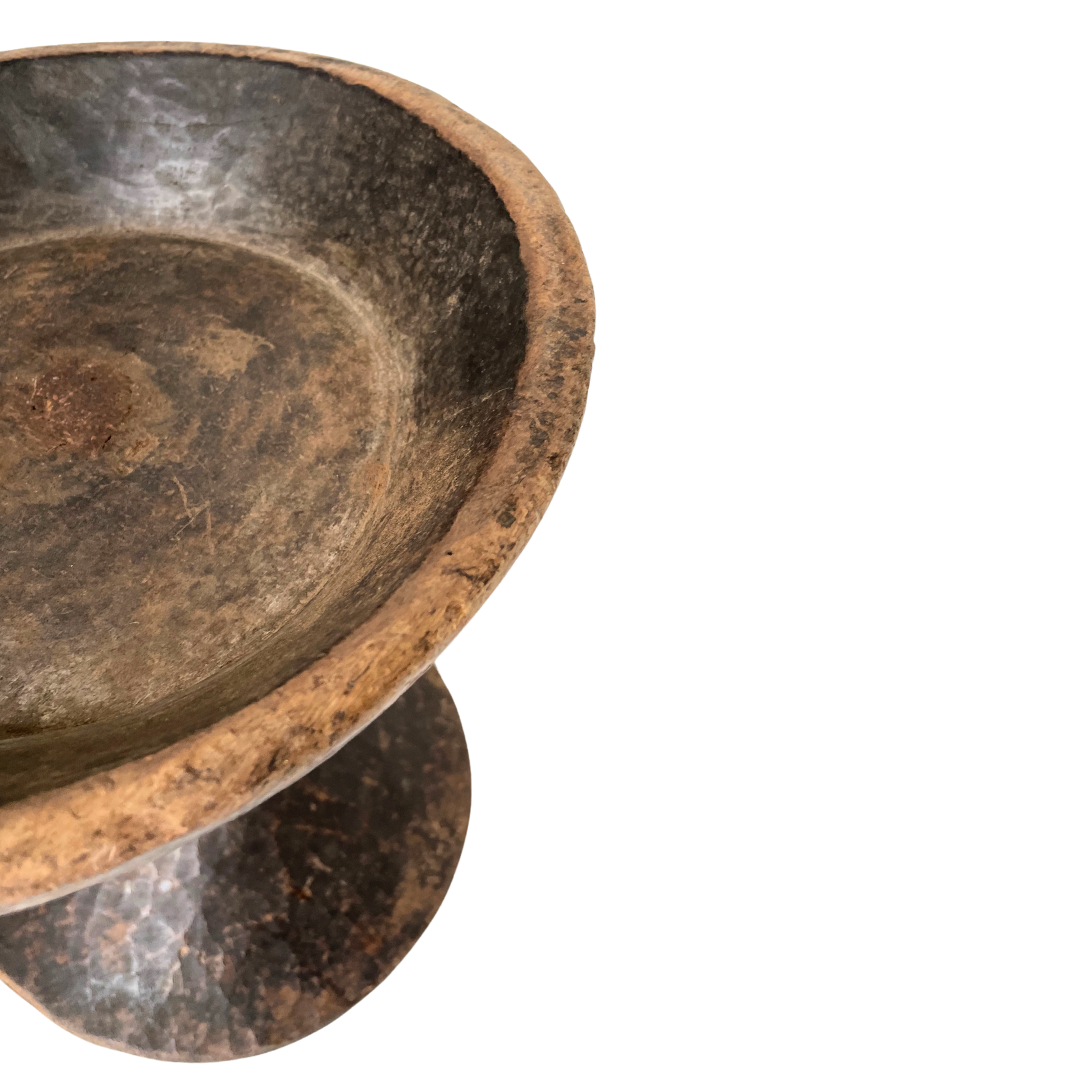
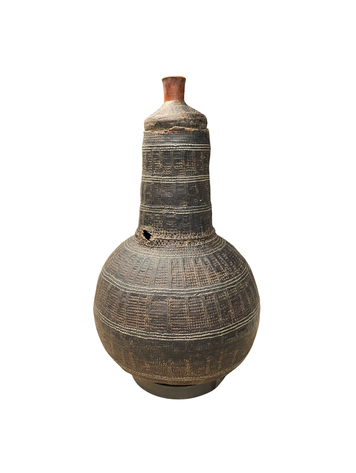
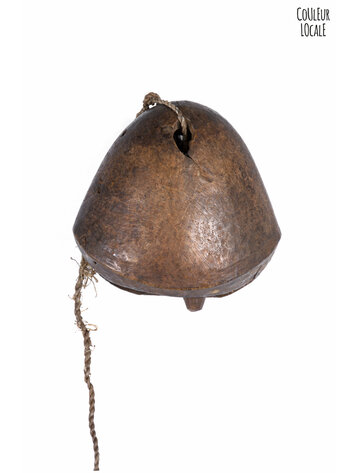
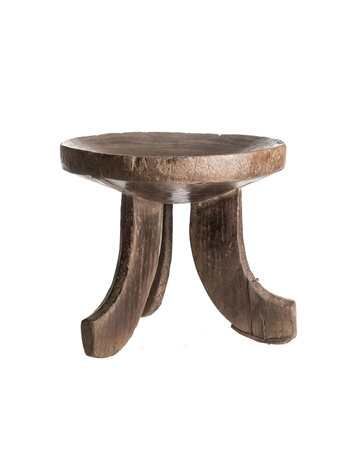
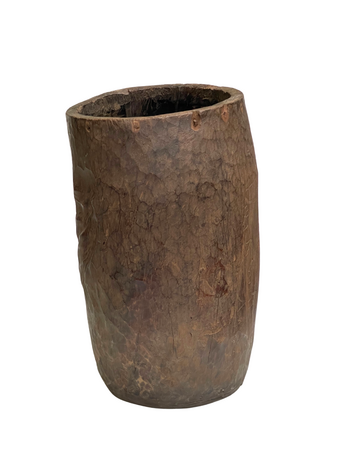
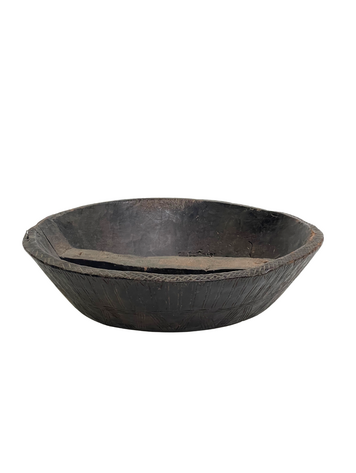
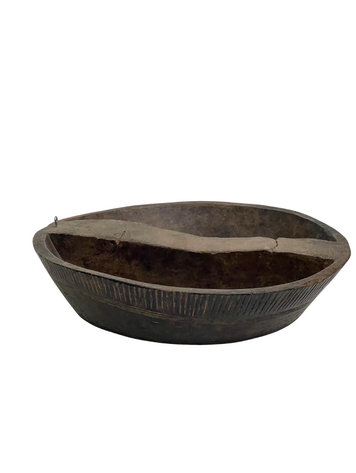
This vintage injera table originates from Ethiopia and was traditionally used for serving injera, the cornerstone of Ethiopian cuisine. Injera tables are low wooden tables on which food is shared communally, reflecting the social nature of Ethiopian dining.
Handcrafted from wood, the table features a simple, functional form. Years of daily use have given the surface a deep natural patina, marked by wear, touch and time. Subtle imperfections are part of its character and authenticity.
Today, this injera table is appreciated as a sculptural interior object. It can be used as a low coffee table, side table or purely as a decorative piece. Its understated form and aged surface make it ideal for wabi-sabi, minimalist and ethnically layered interiors.
Each table is entirely unique.
An injera (also spelled enjera) is an Ethiopian speciality. It is a fermented pancake.
Injera is eaten with the right hand. One tears off small pieces of a large pancake in the middle of the table, and uses it to hold the stew and salad. Afterwards, the injera has absorbed some of the liquid and flavour of the food, and is eaten itself - so the injera acts as cutlery, plate and food at the same time. The meal is over when the injera "tablecloth" has run out.
The best injera is made from the small, ferrous cereal teff. However, it is only produced at medium altitude with sufficient precipitation, and is therefore relatively expensive for an average family. Most highland Ethiopians are poor farmers who grow their own staple food, and they replace (part of) the teff with wheat, barley, maize or rice.