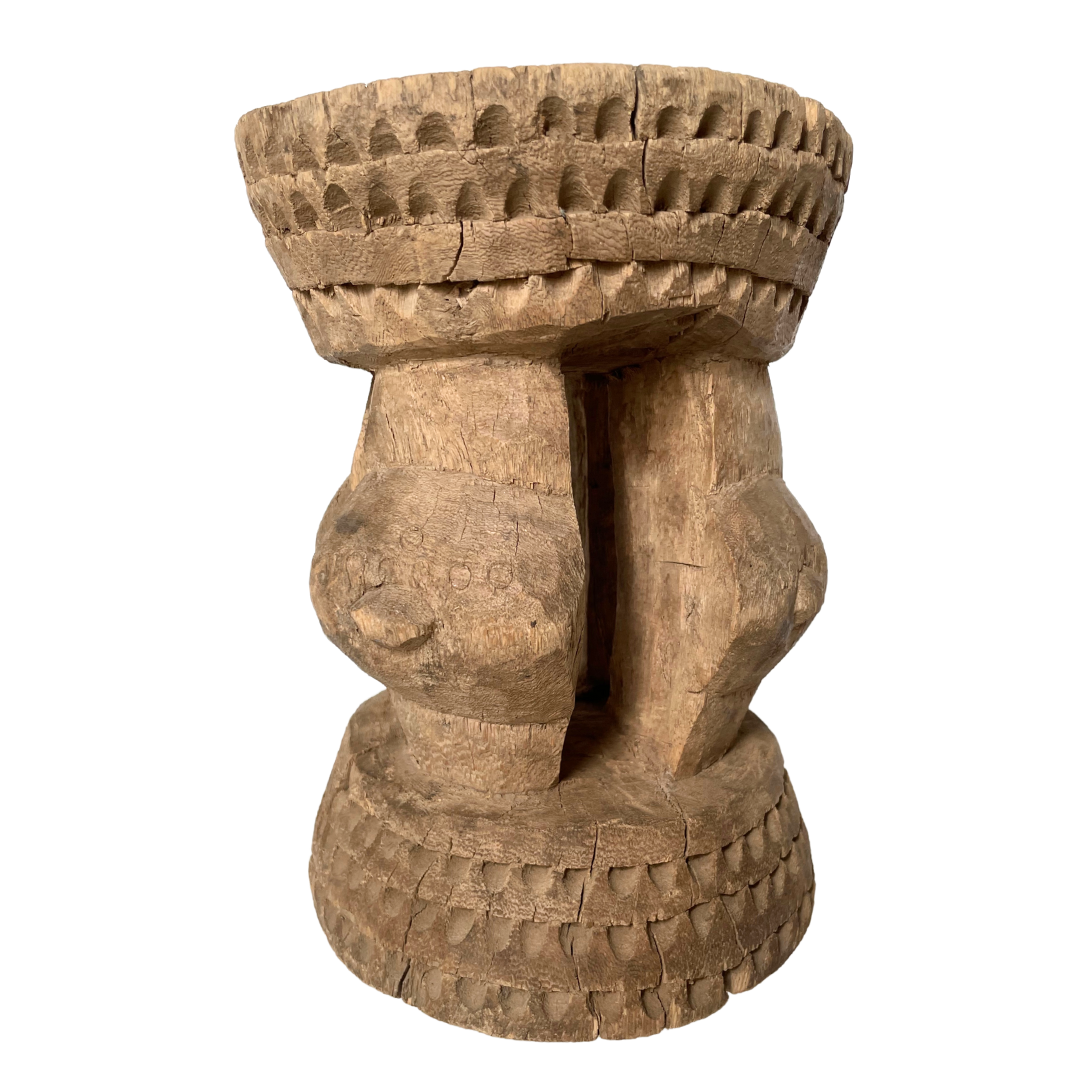
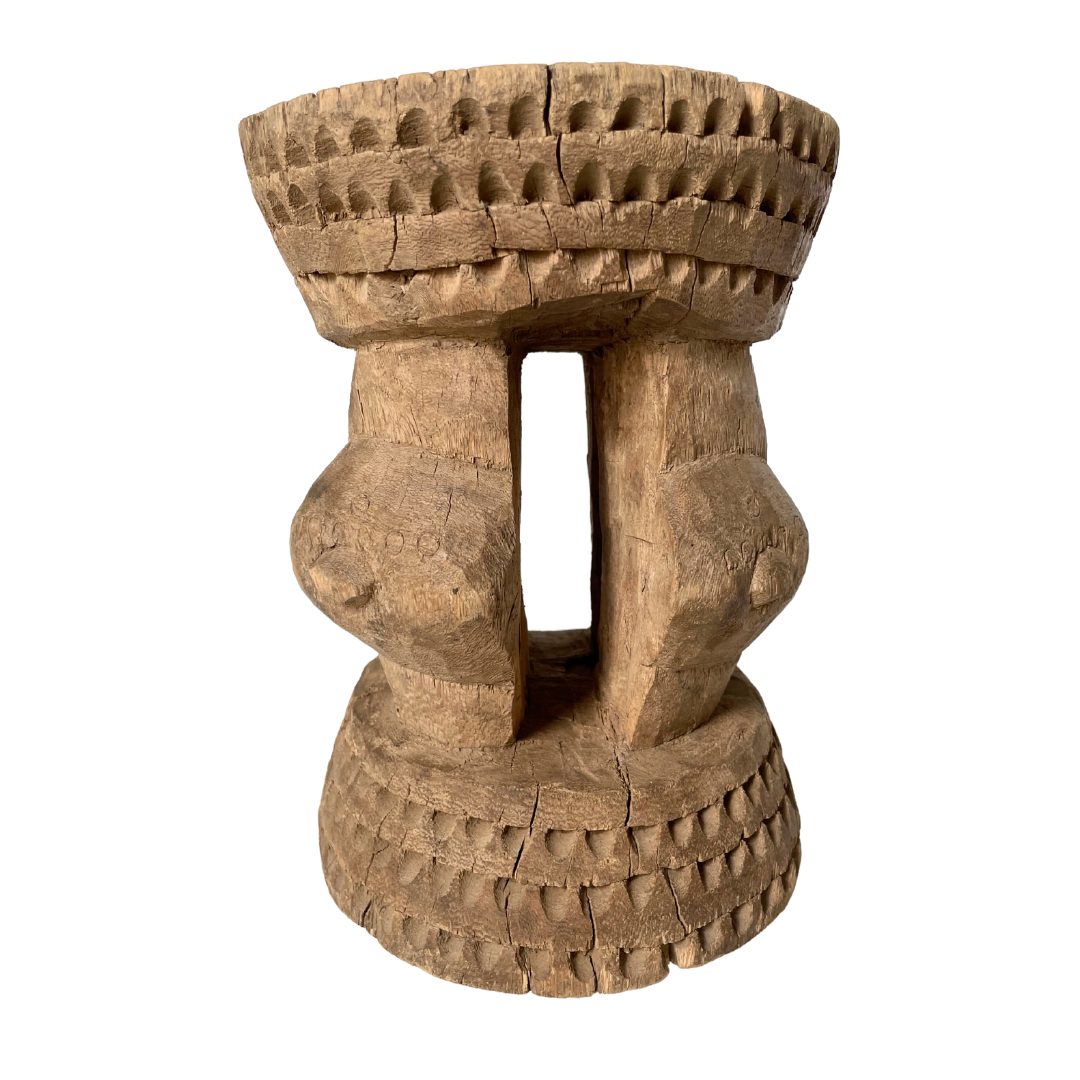
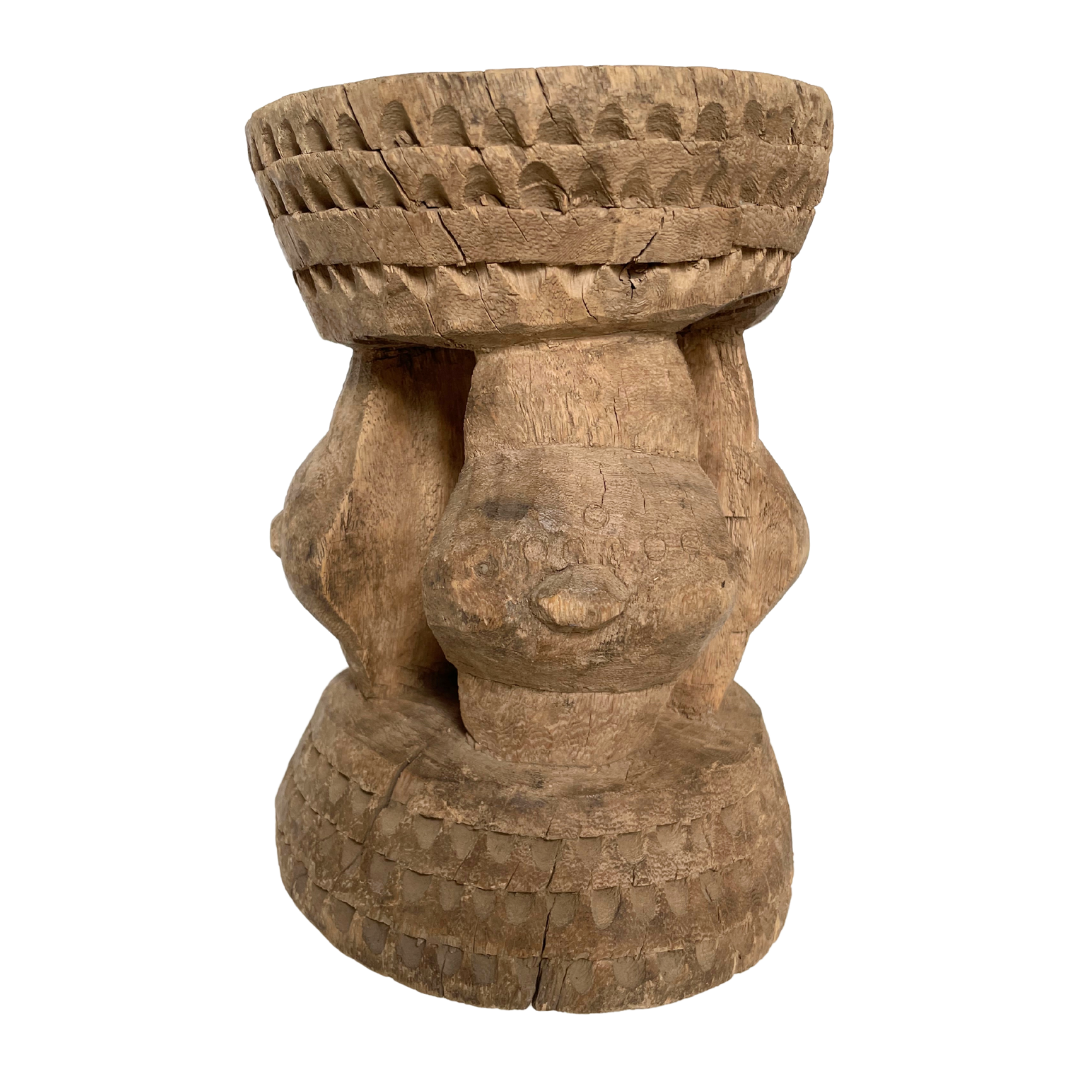
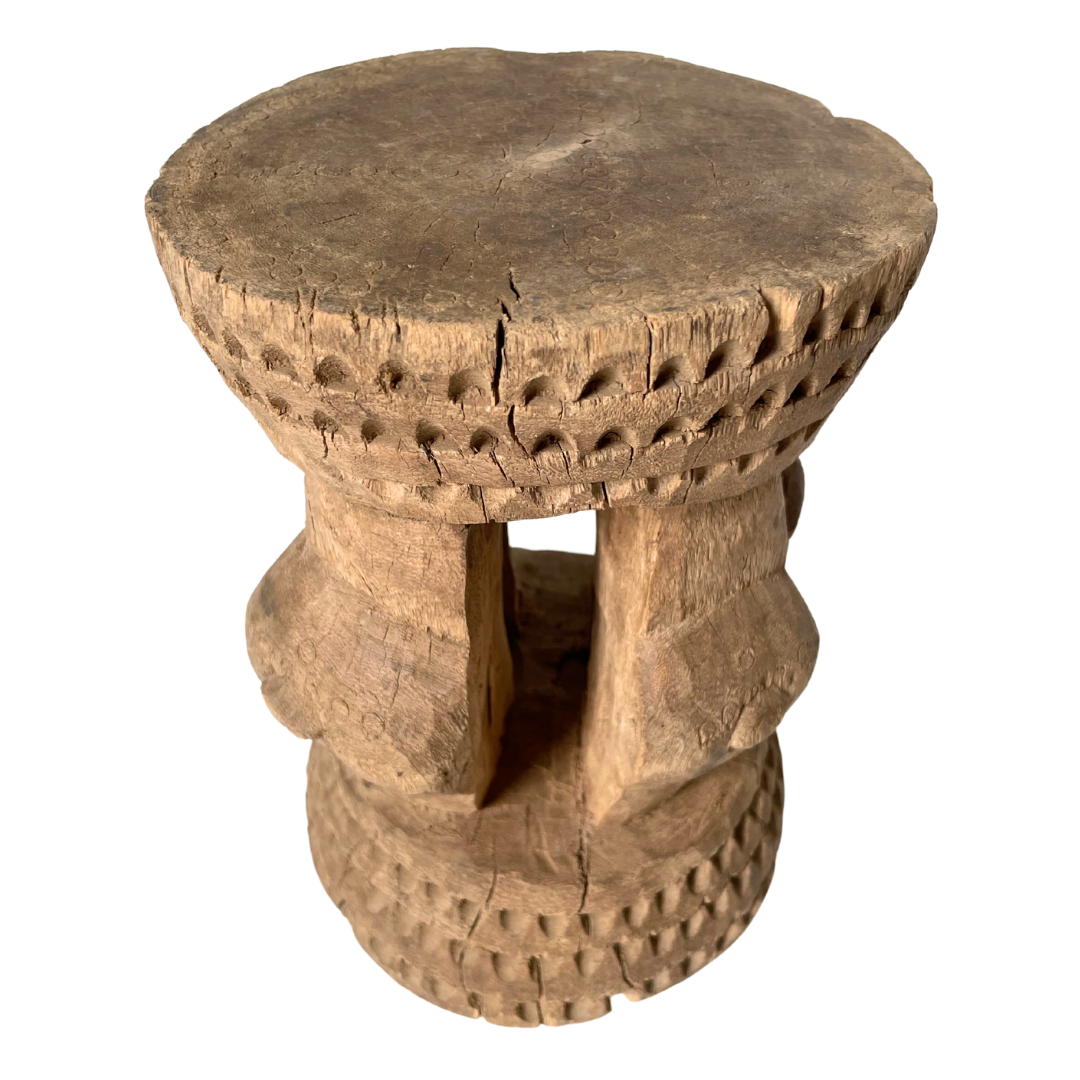
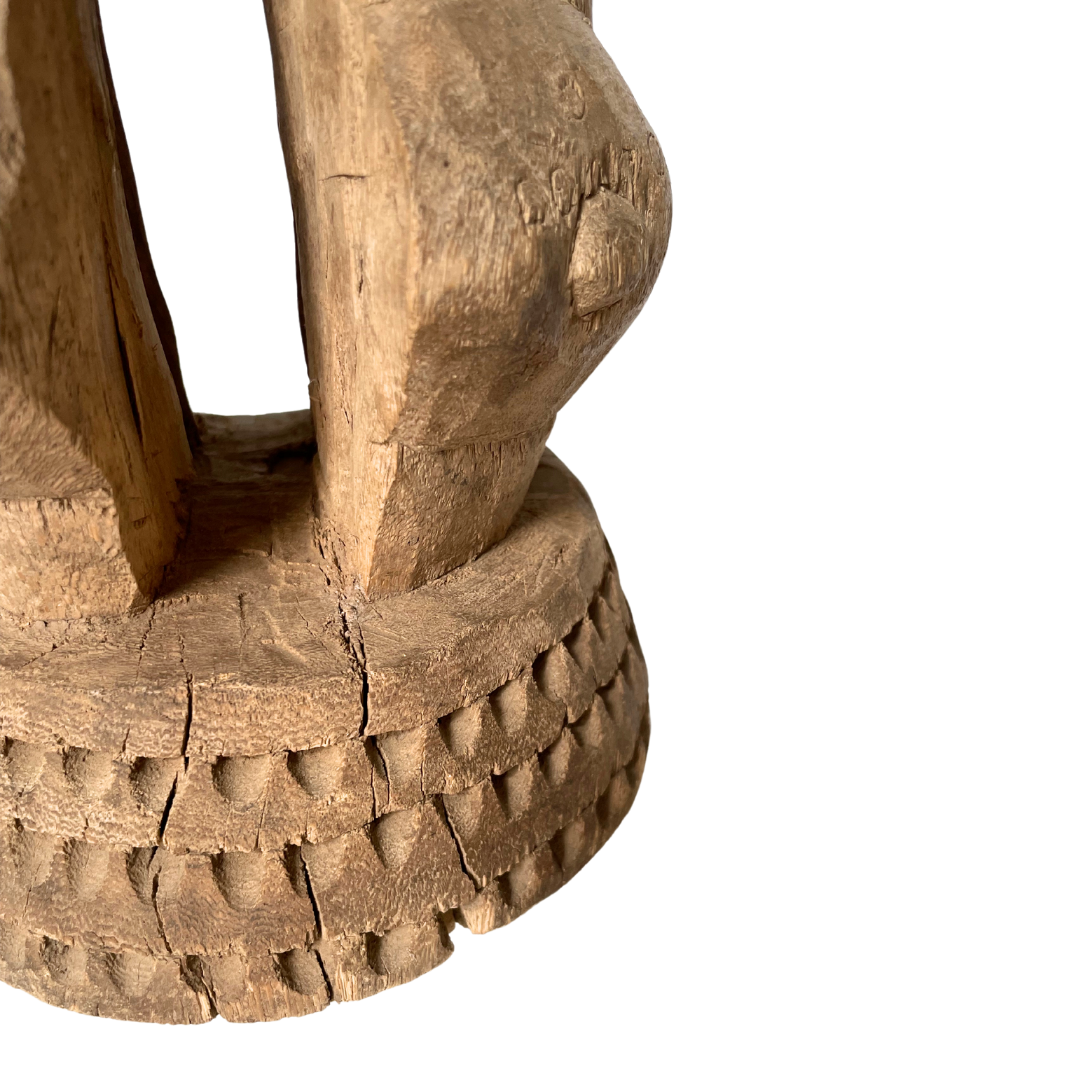
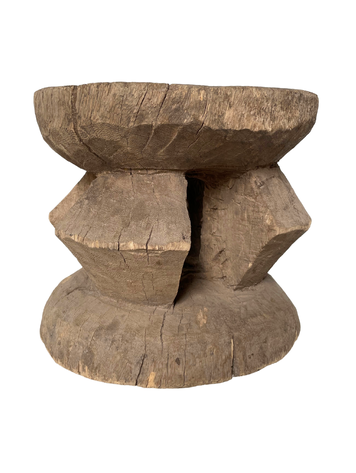
This Dogon stool originates from Mali and was traditionally used in everyday and social life within Dogon communities. Such stools were essential utilitarian objects, while also carrying symbolic and aesthetic significance.
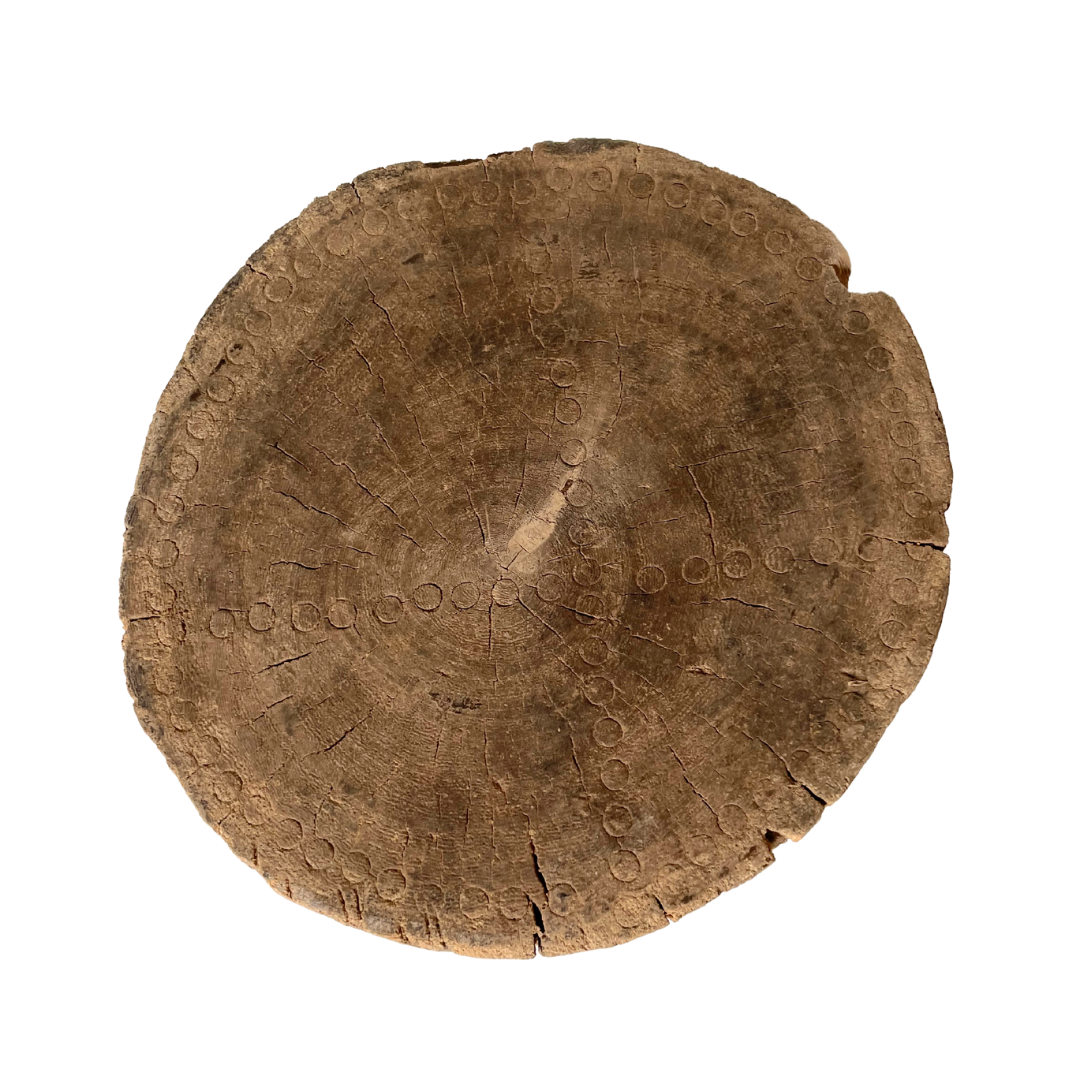
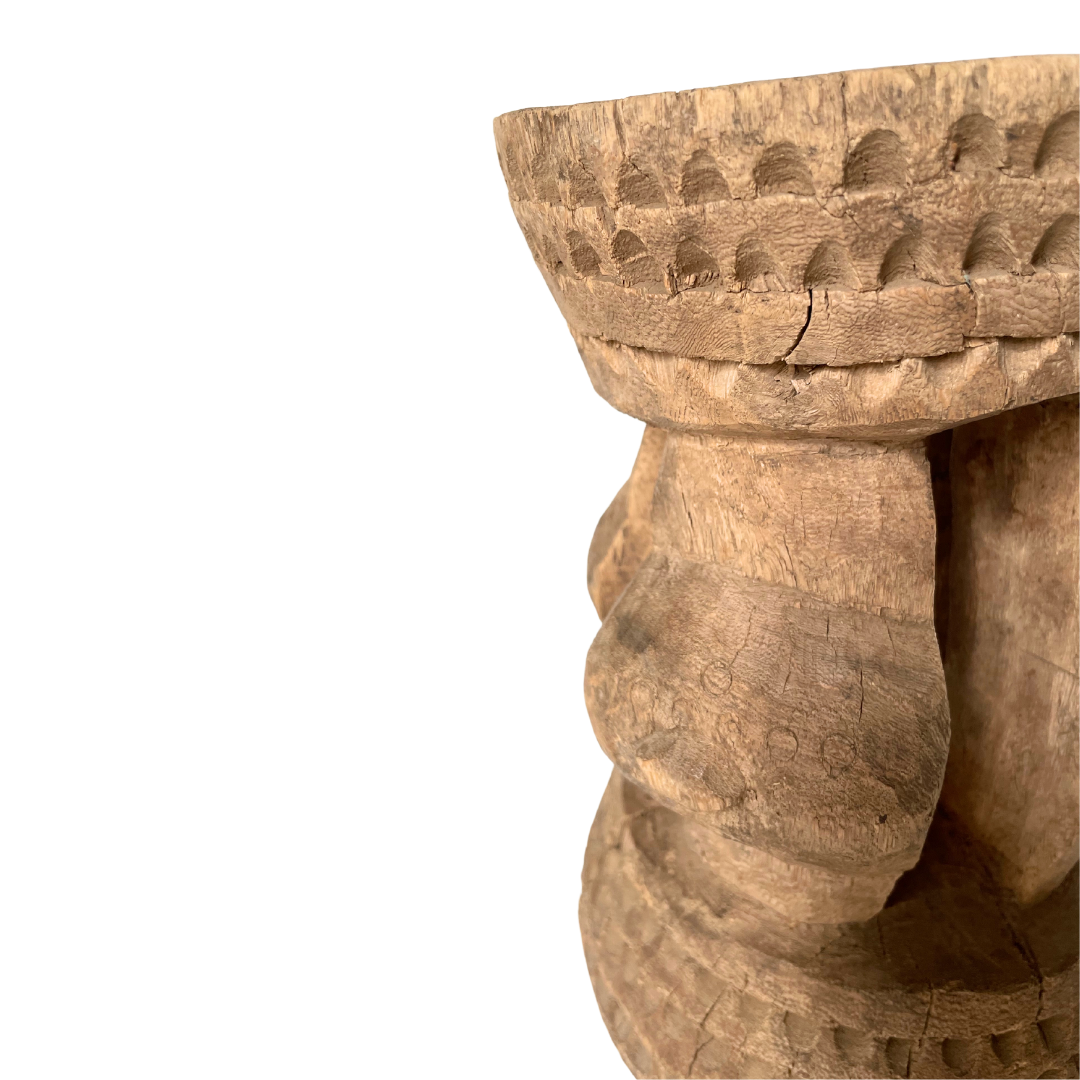
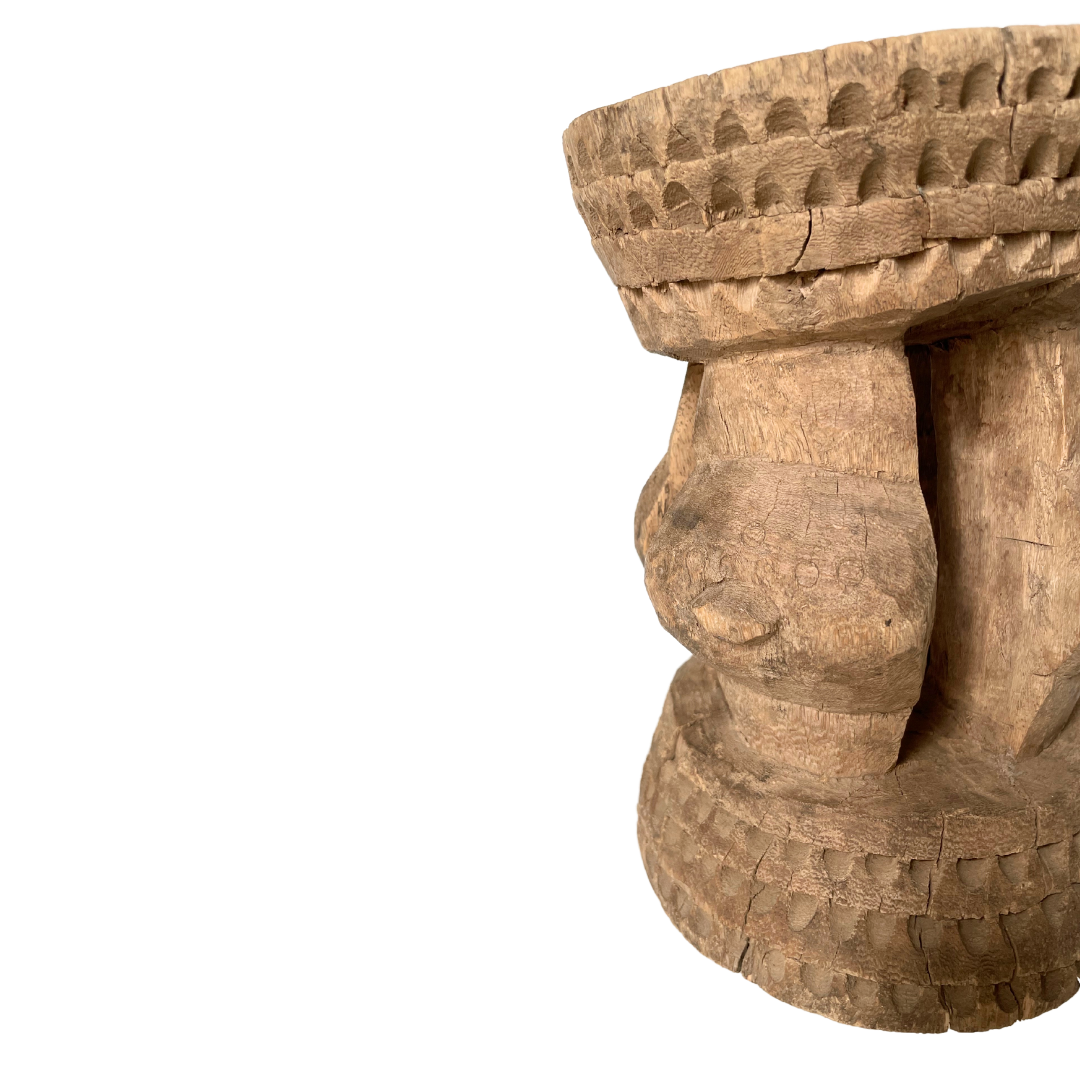
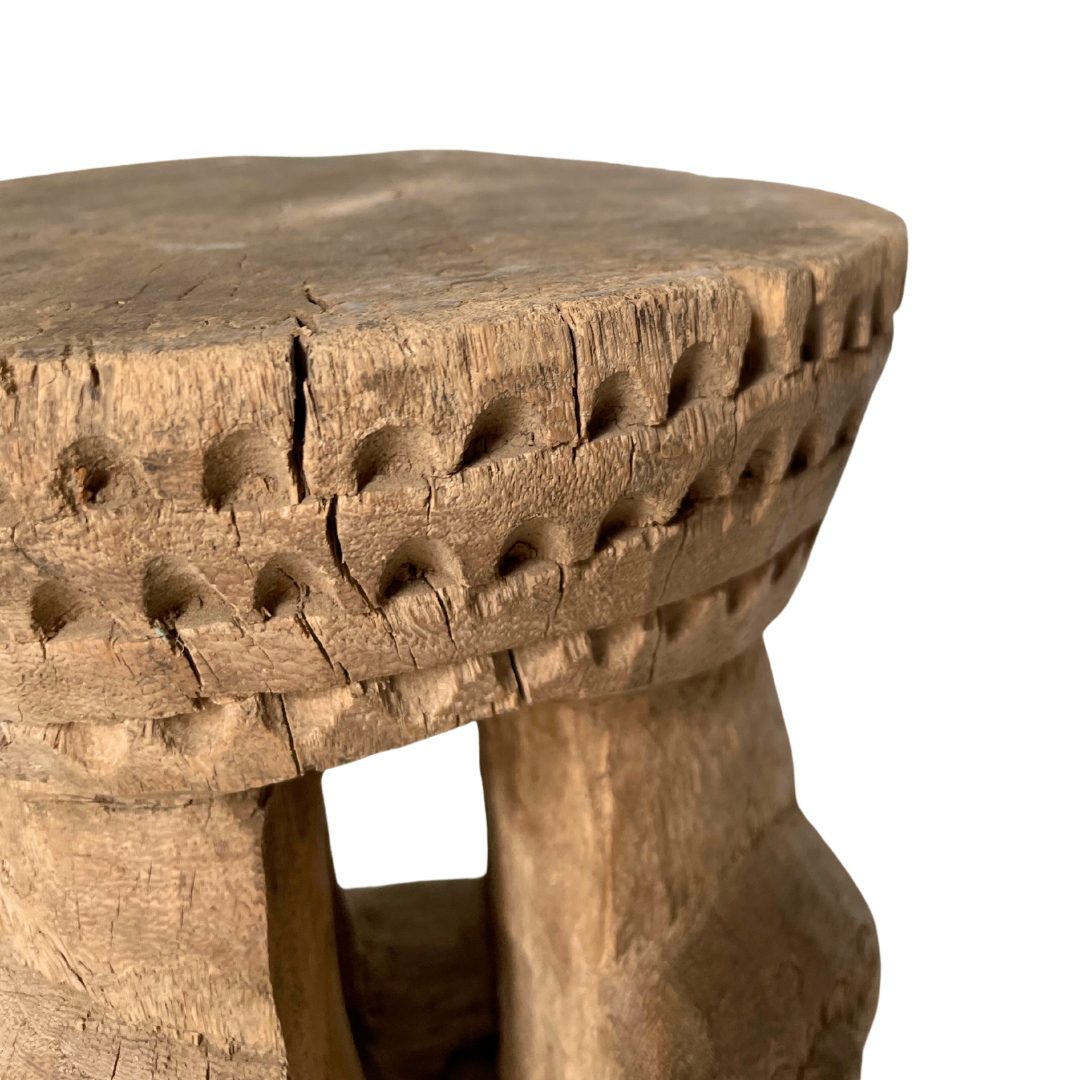
Hand-carved from a single block of wood, the stool is distinguished by its perforated decoration: small, carefully carved holes that rhythmically pattern the surface. These perforations are characteristic of Dogon woodworking and serve both a decorative and symbolic purpose, often associated with rhythm, breath, community and cosmology.
The form is compact and powerful, balancing functionality with sculptural presence. Over time, the wood has developed a deep natural patina, shaped by touch and years of use. The contrast between the worn surface and the perforated motifs gives this stool its expressive character.
Today, this Dogon stool is appreciated as a sculptural interior object. It can function as low seating, a side table or a purely decorative piece. Ideal for wabi-sabi, minimalist and ethnically layered interiors.
Each piece is entirely unique.
Cultural context Dogon:
In central Mali, in the region of the city of Mopti, there is an area of four thousand square kilometres. This area extends from the town of Bandiagara all the way to the border of Burkina Faso. Straight through it runs the Bandiagara escarpment (the Falaise). It is a two hundred kilometre long cliff with a height of about three hundred and fifty metres.
The Bandiagara is an extraordinary landscape of cliffs and sandy plateaus. It is home to beautiful architecture: houses, granaries, altars, shrines and Togu Na - communal meeting places.
The dozens of villages and hamlets that range from small settlements with four houses to villages with several hundred inhabitants are known as the ‘Land of the Dogon’.
The Dogon are originally an agricultural people and the presence of water allowed them to grow their crops. In addition, the water also attracted animals that were shot for bushmeat.
They are animists, with a rigid social and religious organisation, who live between heaven and earth and express themselves through ritual dances and ceremonies.
The social and cultural traditions of the Dogon are among the best preserved in the area of sub-Saharan Africa.
The main reason, however, was that the cliff offered protection. The Dogon made the surrounding land completely flat and built their villages close to the edge of the cliff. This way, they could see their enemies approaching from afar. Indeed, as a non-Muslim people, the Dogon were a target. At that time, it was still common for Muslim tribes to attack entire villages and take the population as slaves to offer to kings and emperors.