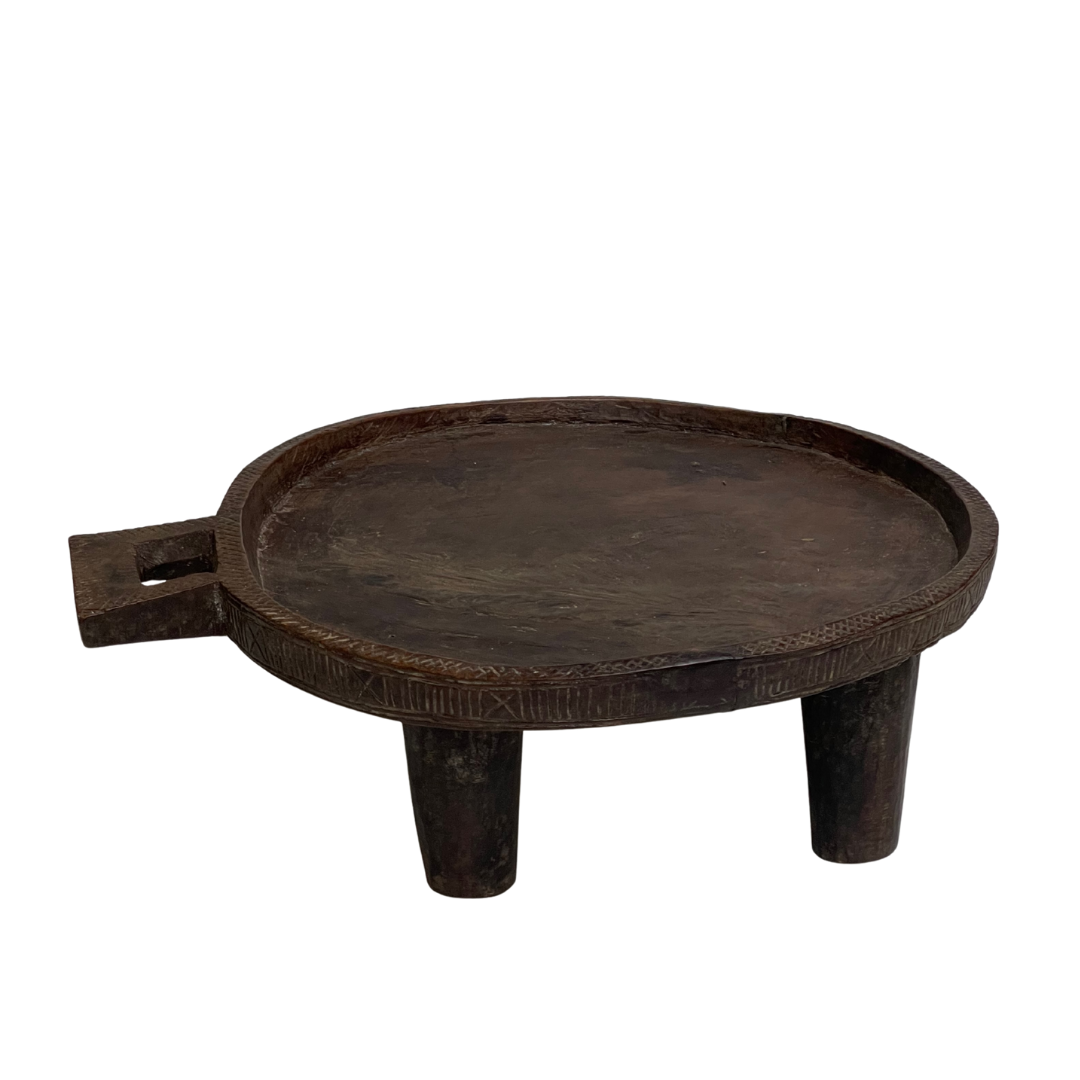
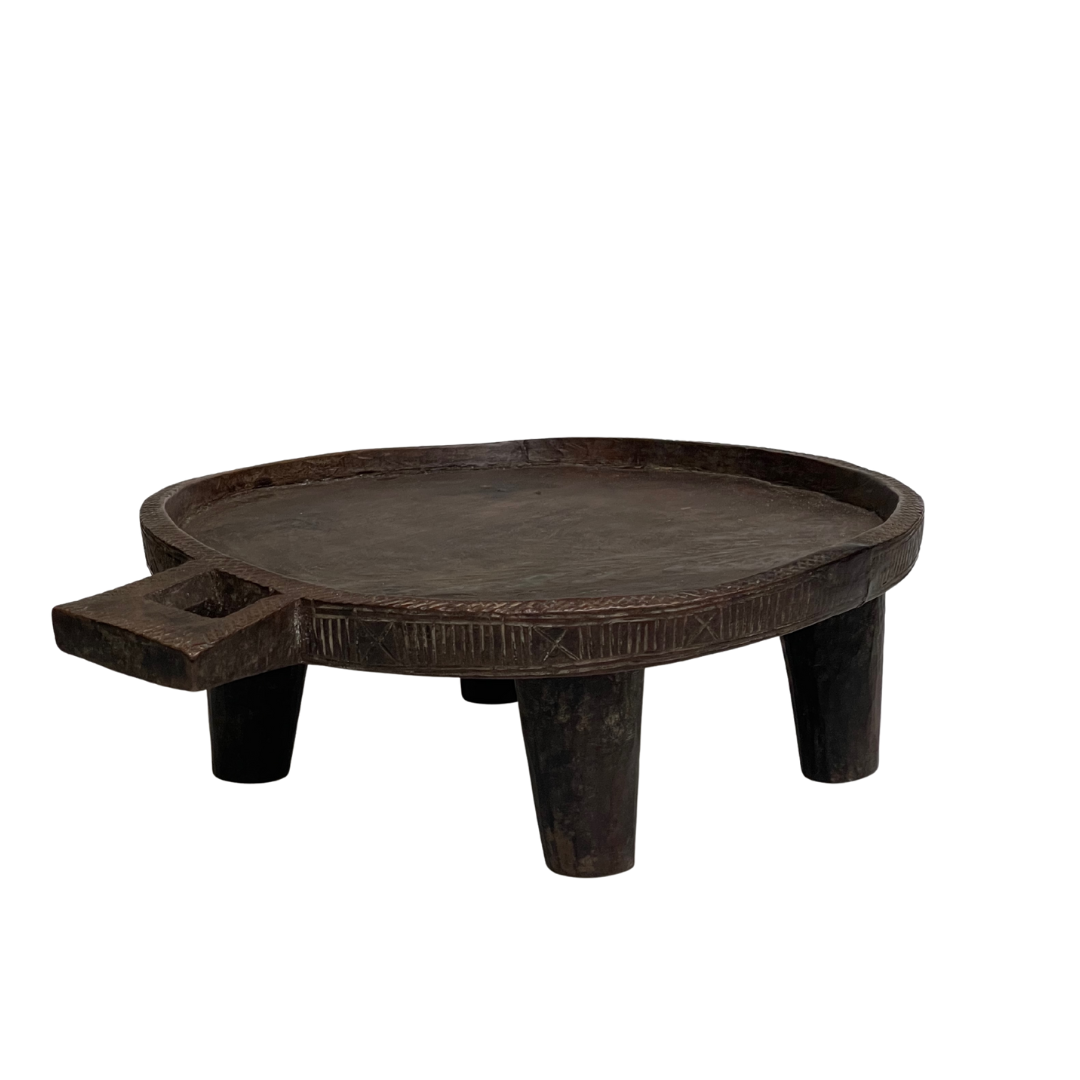
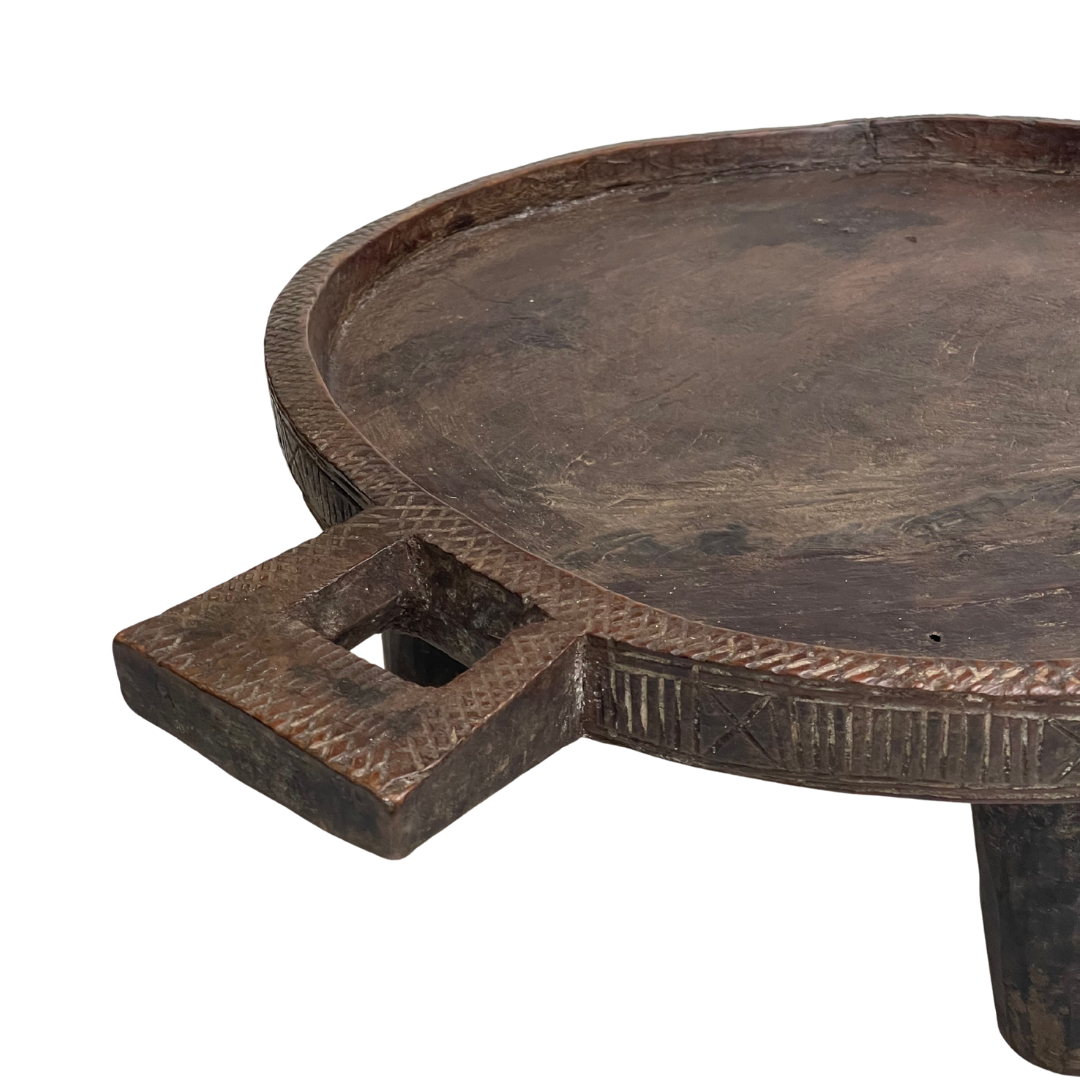
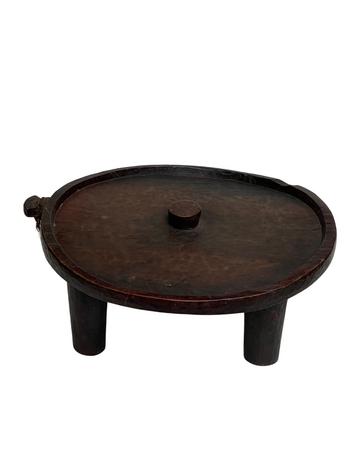
This authentic coffee table originates from the Gurage region in Ethiopia, where coffee is more than a drink — it’s a ritual of community and respect. Hand-carved from a single block of hardwood, the table was traditionally used during coffee ceremonies that brought people together to share stories and tradition.
Its rich patina and traces of use reflect generations of gathering and warmth. Today, it stands as a sculptural piece — minimalist yet soulful, merging history and design. Perfect as a side table or art object with cultural depth and timeless presence.
Ethiopia is the birthplace of coffee. The coffee ceremony is an important social and cultural tradition in Ethiopia. For an Ethiopian, drinking coffee is a ritual, a religious celebration together with friends and family. Ethiopians use the ceremony, which can last several hours, to unwind and exchange news. The ceremony is also meant to welcome unexpected visitors. An invitation to such a ceremony is considered a sign of respect and friendship in Ethiopian and Eritrean culture.
According to tradition, there are three rounds three times a day: morning, afternoon and evening. Each ceremony consists of at least three portions... The awol, the first round in which the older or important persons are the first to receive coffee. This is followed by the other adults. Children do not get coffee but snack or popcorn. The bowl from the first round is strong. The second round, called tona, is derived from the Arabic tani, which means second. The coffee is not as strong. The final brew, in the third round, is called baraka and, because water is always added to the original coffee, is a weak decoction. Bakara means 'blessing'. When the ceremony is over, the elders bless the home and everyone goes their separate ways.